Monday, December 20, 2010

Winter Weather Advisory


Typically December is great month to be a kayaker in Alabama. Frequent rainfall and mild temperatures usually result in lots of river days without much discomfort. However, December 2010 started out with a deep freeze that swept mercilessly across the southeastern United States. Alabama is typically around five to ten degrees warmer than the rest of the southeast paddling scene, but even here nighttime temperatures dipped into the single digits and daytime temperatures stayed below freezing for days on end.


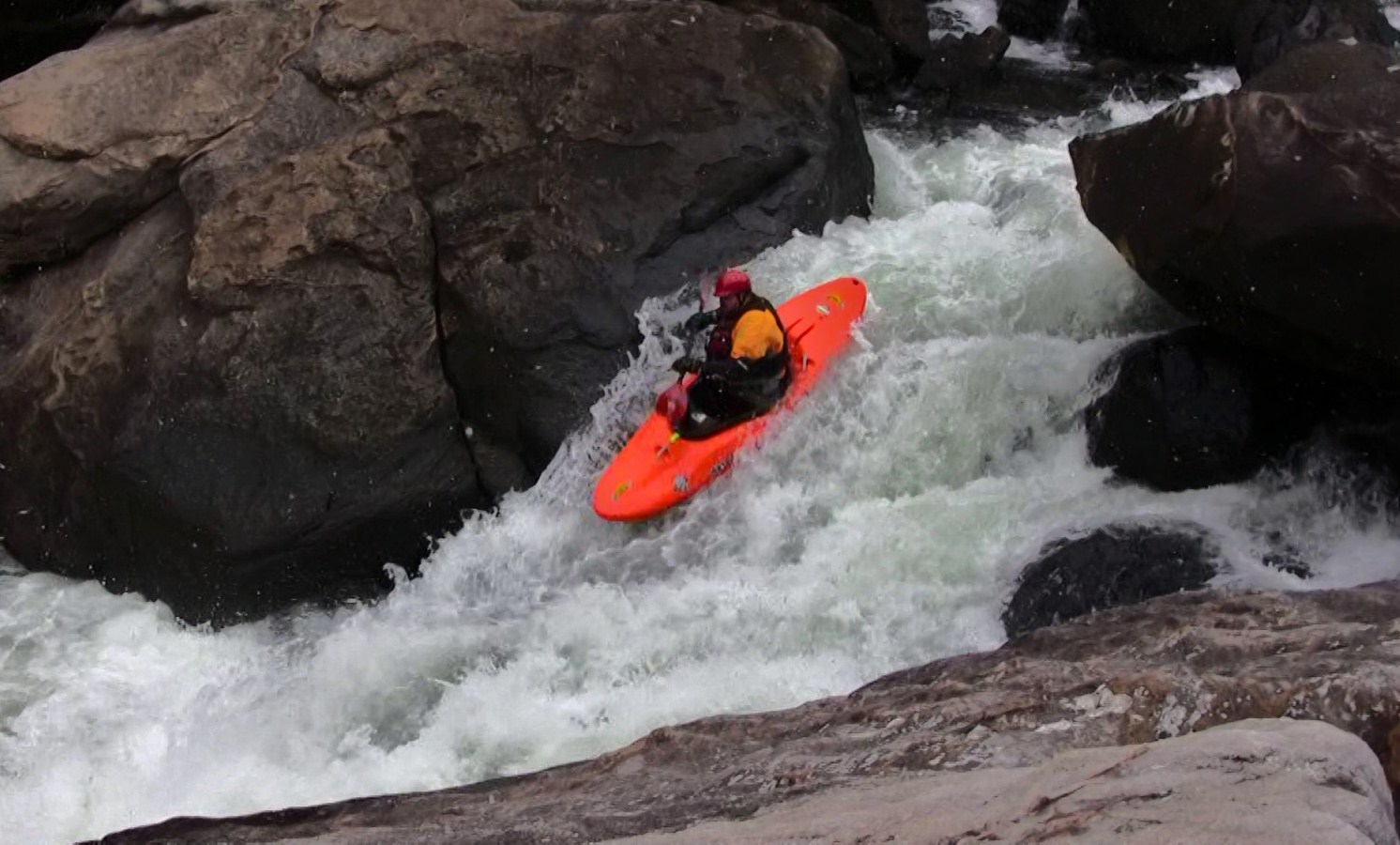
What’s a paddler to do when the water is low and the weather is unkind? The same thing we do the rest of the year, of course! Go kayaking! The lack of rainfall has left many rivers too low, but Little River Canyon in the northeastern corner of Alabama remains runnable at quite low flows. A trip down Little River Canyon at higher flows is usually characterized by pushy water and big holes (lots of fun in its own right). However, at low flows it channelizes between the huge boulders and creates a run that is more the style of a low volume creek and is a local favorite when most other rivers in the region are too low.


The follow video features Little River Canyon at around 250 CFS. This is about the minimum flow that all the rapids can still be paddled, portage free. Although Terminal Eddy is often walked at such low flows (risk to reward ratio is a little off on that one). The video also features all the mandatory elements to EVERY paddling video you’ve EVER seen… sped up footage of the sky/shuttle/hiking, shameless gear plugs, slow-mo boofing, post credits bonus footage, and even a little carnage. Formulaic, I know, but there is a reason paddling videos follow such a predictable path, because paddlers like them that way.


Additional footage of winter paddling in Alabama is featured in latest issue of LVM, which is available now. See a preview and order LVM 35 “Love Thyself “ here.


Until Next Time…

-Adam Goshorn

Tuesday, December 7, 2010

Mexico Nostalgia

(Photo below by Leigh Knudsen)

For the last five years I have been lucky enough to spend the late fall/early winter in the magical paradise of eastern Mexico. The rivers that drain the eastern slopes of the Sierra Madre Mountains boast beautiful turquoise water and a seemingly endless number of waterfalls. Abundant water, lots of drops, and sometimes challenging logistics are all part of what made the annual pilgrimage to Mexico such an adventure every year.

(Photo below by Kim Rudge)

However, early in the fall of 2010 as friends and I discussed a possible Mexico adventure for this year, the combination of security concerns and lack of funds led me to the decision not to go. Now that it is the time of year that I would normally spend south of the border and the great memories from all of the great trips in previous years are at the forefront of my mind. After five consecutive years, I thought

(Photo below by Kim Rudge)

I hope to restart my annual migration south at some point in the future, but for now I thought I would share my nostalgia through a few pictures from various years and a video from our 2007 journey. Our trip in 2007 was especially memorable because it included my first time running several rivers that quickly became some of my favorite in the region, including the Rio Verde, Rio Minas Viejas, and Rio Tamasopo.


Until next time…

-adam goshorn

(Photo below by Leigh Knudsen)

Thursday, December 2, 2010

Alabama Awakening: Fall 2010

The fall of 2010 has been especially dry in the southeastern United States, leaving boaters to rely on dam release runs we waiting for the rains to return. For north Alabama, the fall of 2010 has been the exact opposite of the fall of 2009. In 2009 the rains came back in force in mid September and provided consistent natural flow into early June 2010. However, at the end of the first week of June, things dried up and there have been very few natural flow events since… until this week!


Early this week, northern Alabama received around four inches of rain over the course of two days. By Tuesday morning the ground was thoroughly saturated and the rain was still coming down in copious sheets. Despite the formerly low water table, rivers and creeks everywhere sprang to life. Flows in Little River Canyon went from 50 CFS to 8,000 CFS in less than a day. As the rivers emerged from there long hibernation, so did the network of boaters across the southeast. I think I received more calls, e-mails, and text about boating in two days than I did in the previous two months combined; everyone was beyond amped!


Leaving work a little after noon I met Cliff Knight at the put-in for Chinquapin Creek, AL. The classic section of Chinquapin drops a whopping 350 feet over only 0.75 miles as it falls into Little River Canyon. The last time I had paddled Chinquapin, I wondered about what the creek may contain in the couple of miles upstream of the traditional put-in. The gradient was milder, but the upper sections other local creeks all had favorable bedrock features so I had to wonder why no one had ever checked it out. Cliff and I debated for a few minutes before concluding that anything was worth doing once and the only way to really know what was there was to go paddle it!


My expectations were pretty low as we put on, but I couldn’t help but feel that excitement that always comes from paddling into the unknown. I love exploration and finding out what is around the next bend, especially when you really have no idea what you will find (in this situation, I was fully expecting to find a tree choked portage fest). As it turned out, we were presently surprised to find that Upper Chinquapin was a fun class III-IV run with no portages for wood. A mix of bedrock slides and small boulder style rapids reminded us both of the characteristics of Johnnies Creek AL (only a couple miles away), but significantly easier.


We made our way down in less than two hours, mostly boat scouting with a couple of bank scouts at blind rapids. After our successful run of Upper Chinquapin Creek we followed it up with a quick sprint down Upper Teddy Bear Creek (just a couple of miles north), finishing shortly before dark.


The following day my friend Kim shot a little video of me taking my lunch break from work…


Until Next Time...

-adam goshorn

Wednesday, September 8, 2010

Review: 2010 Pyranha Burn


Review by Adam Goshorn
Action Photos by John Kern

Boat Stats:
Length: 8’3”
Width: 27”
Volume: 80.3 gal
Weight: 44.1 lbs

My Stats:
Height: 6’1”
Weight: 265 lbs.
Inseam: 30”
Feet: size 12


Having entered the sport after the introduction of edges and flatter hulls, the majority of the boats that I have owned have had simi-planing hulls, including most of the creekers. Perhaps it is because of my introduction to planing hulls early in my paddling progression or perhaps it is just my paddling style, but I have almost always preferred boats with an edge I can use for ferrying, staying on line, and snapping into and out of eddies. The original Burn series was the natural progression from its predecessors (the H2 and H3) and certainly fulfilled my desires for snappy handling. As to be expected, the new 2010 Burn furthers the progression towards perfection with noticeable design changes, but none that are radically different from the original series.


I never like to review a boat until I have really spent a lot of time in it and gotten to use it in a variety of situations. I paddled the 2010 Large Burn a TON in the last 6 months (80+ river days) and I have had it in almost every type of whitewater. I spent lots of time on low volume creeks like North Carolina’s Green River and Johnnies Creek here in Alabama. I have also been able to paddle it quite a bit on the pushy, higher-volume creek style that characterizes Little River Canyon (AL) at a healthy flow. In June I was able to get a great feel for the Burn in a high volume river running environment when I spent 14 days paddling it down the Colorado River through the Grand Canyon. I feel that I have thoroughly gotten to know the new Burn design over the past 6 months and can now provide an informed opinion of its features and the differences from the previous design (which I also paddled extensively).


The only thing I think the 2010 Burn does less well than the original Burn series is a slight loss in play ability. It still surfs and spins etc (still much better than other creekboats), but it seems more difficult to break loose for spins with the new design. It also seems to want to carve off of waves more readily than the original Burn series. That being said, I still surfed the biggest waves I have ever surfed while paddling the new Burn in the Grand Canyon. I also brought my Molan down the Colorado and would switch-out sometimes to playboat. However, I only caught rides in the biggest of the ‘catch-on-the-fly’ waves with the extra speed of the Burn.


The new edge design is probably the most noticeable change, but Pyranha has maintained enough edge to still give it that classic Burn handling that made the original such a great boat! The slightly raised edge on the 2010 Burn doesn't require quite as much edge control as the original, making it more forgiving all around. The stern edge seems especially less grabby, making everything easier. From encounters with rocks on low volume creeks, to dealing with harsh cross currents in higher volume rivers, the raised edge makes the new Burn less likely to trip you up in every situation.


The 2010 Burn also rolls up a little easier than its predecessor, due at least in part to the lower sidewall around the hip area. This will be especially appreciated by shorter paddlers or those with limited reach as it really does allow you to reach further around the boat when rolling. The other noticeable difference in the paddling performance of the 2010 Burn is that it has slightly more bow rocker, making it easier to boof. The trade off for that easy boof (after all, every design choice is a trade off) is that the new Burn seems a hair slower than the original. Considering the original Burn was plenty quick, I think it was a trade worth making.


With all the positive design changes mentioned above, the recessed drain plug and reprofiled anchor points are just a nice afterthought. The changes in design from the original Burn series to the 2010 Burn are much less dramatic than the changes from the H3 to the original Burn. The designers at Pyranha aren’t reinventing the wheel here, just tweaking several key areas to improve specific performance desires. A worthy goal and one they have achieved with flying colors!

Until Next Time...

-adam