Sunday, May 29, 2011

From the Archive: Volume I


A couple years ago, on the Team Pyranha blog, Ryan Scott posed a retrospective of pictures of himself paddling various Pyranha boats through the years (see his post here). At the time I remember thinking that it would be a fun project to look back through some of my older padding photos and try to find pictures from the many Pyranha boats that influenced my paddling life. As with all too many ideas, I promptly forgot about it... until recently.

This year, Pyranha celebrates its 40th anaversiry. As I thought about the long history of Pyranha as a company, it reminded me of Ryan's post and prompted me to finally dig around in my own photos to find a few pictures to share. Pyranha was founded before I was born, but I can't think of another company that has had more of an impact on my life. After owning a number of used boats, the first boat I ever purchaced brand new was a Pyranha Micro 250 (thank you student loans!). It served me well in my early days of learning to creek and was the start of long line of Pyranha models that remain my boats of choice to this day.


The trusty H2 forced me to learn edge control and taught me the many benefits of paddling a creekboat with a bit of an edge.


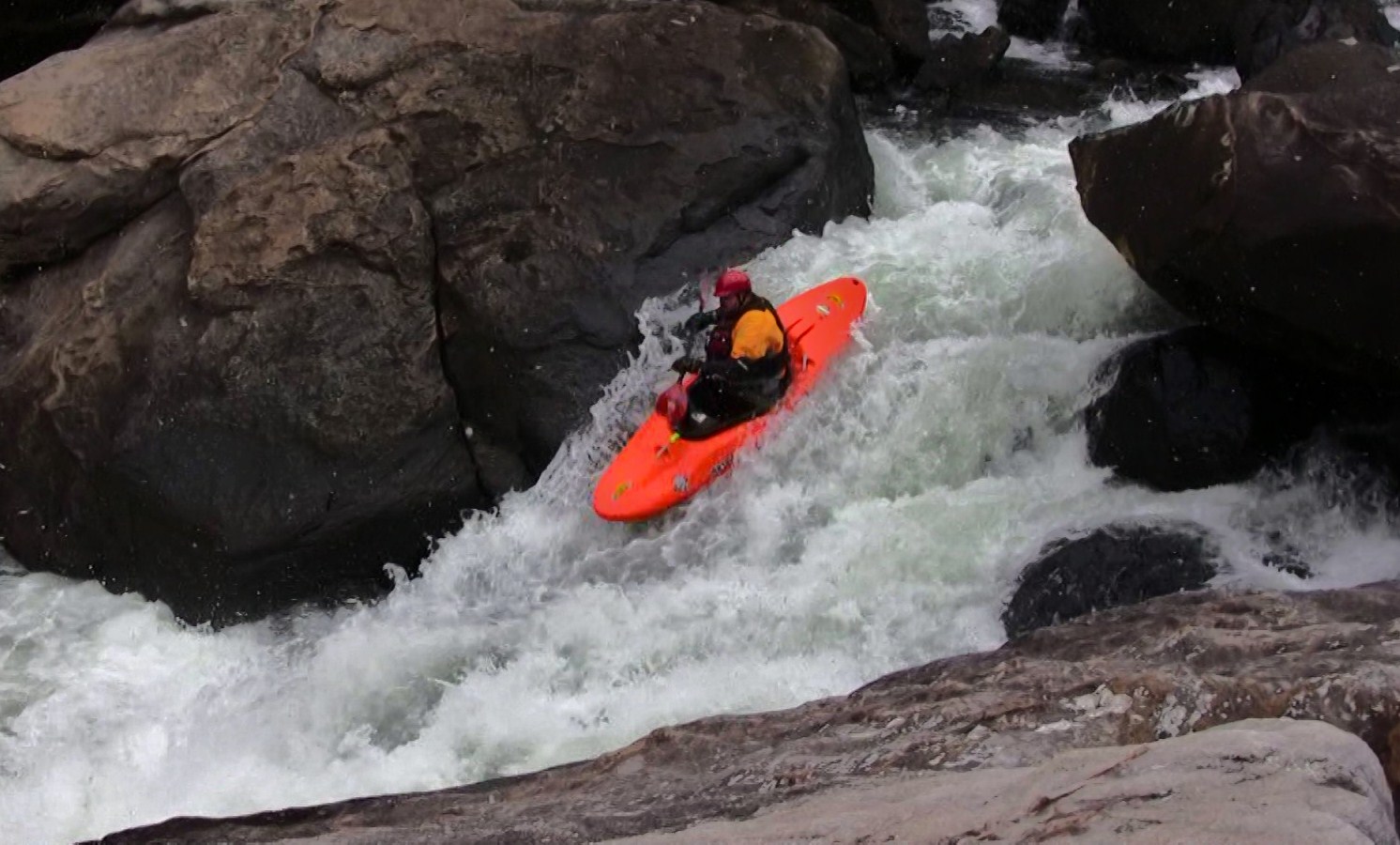
Along with looking through old photos, I dug out some old video footage as well from the days when Micro's ruled the creeks. Years ago several friends and I were driving from TN to WV when a bunch of heavy thunderstorms came through the area. I had some knowledge of the area I remembered a neat park-n-huck that wasn't far off the interstate... so we went. It was by far the biggest thing Dustin and I had run up to that point and we didn't really have much waterfall technique either, but we went for it and scraped off the lip to the cheers of some locals who were watching. Good times!


Stay tuned for more from the archive!

Until Next Time...

-adam


kayak session

Thursday, February 24, 2011

The Klingon!


The new Klingon sprayskirt from Immersion Research replaced the popular SBD (Simple, But Dry) series and has clearly evolved from the earlier design. For those unfamiliar with this style of sprayskirt, it is a bungee skirt that sandwiches a flap of neoprene between the bungee and the cockpit rim. What was unique about the SBD (and continues to be so great with the Klingon) is the rubberized coating on the underside of the neoprene where it contacts the cockpit rim, which creates an impressively dry seal.


My first exposure to this design came a few years ago while gearing up at the put-in for the Gauley when a friend showed me the SBD design he was using on his playboat. As soon as he showed me the rubberized coating on the neoprene, the light bulb went off in my head. It was so obvious! The give of the neoprene, combined with the sealing ability of the rubber coating, would mate much better with the cockpit rim than skirts with a hard rubber rand or regular bungee skirts. I was sold… I ordered one for my playboat the following week.

(Little River Canyon, AL - photo by Cliff Knight)

As a Pyranha paddler, every boat in my fleet has the one screw on each thighbrace that sits right where the rubber rand of a skirt would seat against the cockpit rim. Once I started using the SBD on my playboat, difference in how dry my boat would be was remarkable. The harder rubber rand of the skirts that I had been using were not as malleable and therefore couldn’t seal against the screw the way the soft neoprene of the SBD/Klingon does. I was so impressed with how dry my new skirt was keeping my playboat, after a few months I ordered one to fit my creekboat and immediately started using it as my primary creeking skirt.

(Johnnies Creek, AL - photo by Drew Armstrong)

Last year I tore a sizable hole in my creeking skirt right around the time the SBD was upgraded to become the Klingon. Naturally, I upgraded as well and couldn’t be happier. The Klingon is easier to put on (especially when dry) and so far seems to be more durable (better reinforcement on the topside and a more durable rubber coating on the underside). The rubberized coating of these designs also makes them more implosion resistant than other bungee skirts because of the way it seals/sticks to the cockpit rim. Before the SBD, I had always used rubber rand skirts due to fears of implosion, but now use the Klingon with the same degree of confidence.

(Short Creek, AL)

Since switching to the Klingon, I’ve paddled lots of creeks, waterfalls, and a speedy (7-day) self support trip down the Grand Canyon. The Klingon has served me well under all of these conditions and it provides the driest fit of any skirt I’ve tried (especially for that tricky Pyranha thighbrace screw). In the spirit of fully testing this skirt, I’ve even tested the grab loop (twice!) and can fully testify to its functionality (but those are stories for another day). As with all IR skirts, it’s available in a full line of tunnel and deck sizes or it can be mated onto their drytops to create a custom drydeck (which I hope will be my next purchase!). Weather you’re playboating or creeking, anyone who prizes a dry boat should consider the Klingon as their next skirt.

Until Next Time…

Adam Goshorn

(Little River Canyon, AL - photo by Cliff Knight)


kayak session

Monday, December 20, 2010

Winter Weather Advisory


Typically December is great month to be a kayaker in Alabama. Frequent rainfall and mild temperatures usually result in lots of river days without much discomfort. However, December 2010 started out with a deep freeze that swept mercilessly across the southeastern United States. Alabama is typically around five to ten degrees warmer than the rest of the southeast paddling scene, but even here nighttime temperatures dipped into the single digits and daytime temperatures stayed below freezing for days on end.


What’s a paddler to do when the water is low and the weather is unkind? The same thing we do the rest of the year, of course! Go kayaking! The lack of rainfall has left many rivers too low, but Little River Canyon in the northeastern corner of Alabama remains runnable at quite low flows. A trip down Little River Canyon at higher flows is usually characterized by pushy water and big holes (lots of fun in its own right). However, at low flows it channelizes between the huge boulders and creates a run that is more the style of a low volume creek and is a local favorite when most other rivers in the region are too low.


The follow video features Little River Canyon at around 250 CFS. This is about the minimum flow that all the rapids can still be paddled, portage free. Although Terminal Eddy is often walked at such low flows (risk to reward ratio is a little off on that one). The video also features all the mandatory elements to EVERY paddling video you’ve EVER seen… sped up footage of the sky/shuttle/hiking, shameless gear plugs, slow-mo boofing, post credits bonus footage, and even a little carnage. Formulaic, I know, but there is a reason paddling videos follow such a predictable path, because paddlers like them that way.


Additional footage of winter paddling in Alabama is featured in latest issue of LVM, which is available now. See a preview and order LVM 35 “Love Thyself “ here.


Until Next Time…

-Adam Goshorn

Tuesday, December 7, 2010

Mexico Nostalgia

(Photo below by Leigh Knudsen)

For the last five years I have been lucky enough to spend the late fall/early winter in the magical paradise of eastern Mexico. The rivers that drain the eastern slopes of the Sierra Madre Mountains boast beautiful turquoise water and a seemingly endless number of waterfalls. Abundant water, lots of drops, and sometimes challenging logistics are all part of what made the annual pilgrimage to Mexico such an adventure every year.

(Photo below by Kim Rudge)

However, early in the fall of 2010 as friends and I discussed a possible Mexico adventure for this year, the combination of security concerns and lack of funds led me to the decision not to go. Now that it is the time of year that I would normally spend south of the border and the great memories from all of the great trips in previous years are at the forefront of my mind. After five consecutive years, I thought

(Photo below by Kim Rudge)

I hope to restart my annual migration south at some point in the future, but for now I thought I would share my nostalgia through a few pictures from various years and a video from our 2007 journey. Our trip in 2007 was especially memorable because it included my first time running several rivers that quickly became some of my favorite in the region, including the Rio Verde, Rio Minas Viejas, and Rio Tamasopo.


Until next time…

-adam goshorn

(Photo below by Leigh Knudsen)